
On entering the buoy field off Unije, HERA looks for a place to spend the night. The buoy costs 60 euros for the 50-foot yacht.
Picking up the buoy together
One person steers, another handles the line and feedback remains short. Once attached, connection, clearance and swinging room are checked. The exact technique follows buoy, weather and yacht.
Then the island evening begins
Only when HERA lies safely does the buoy field become a quiet place to stay. The bathing platform, cockpit and island view take over the rest of the day.
Inside a buoy field, speed becomes time reserve
Approaching Unije, slow controlled speed creates time to distinguish free and occupied buoys, prepare lines and watch other boats. Too little speed can reduce steerage; too much removes correction time. Roles are assigned before the final approach. The manoeuvre ends only when the connection carries the load and HERA lies settled, not at the first contact with the buoy.
Before the final approach, the crew also defines when to abort. If the buoy disappears, another boat enters the line or the prepared line is not clear, HERA regains distance and starts again. A few minutes protect hands, hull and neighbours; a controlled second attempt is part of the plan, not a lack of routine.
Frequently asked questions
What did the buoy cost for HERA?
The buoy cost 60 euros per night for the 50-foot yacht.
What is checked after making fast?
The connection to the buoy, swinging room, distances and the position of neighbouring yachts are checked.
Why is the approach kept slow?
At low speed, direction and distance can be corrected more controllably.
Talk to ONBOAT.
If a story raises your own question: we support yacht projects, deliveries, service and owner representation.
View service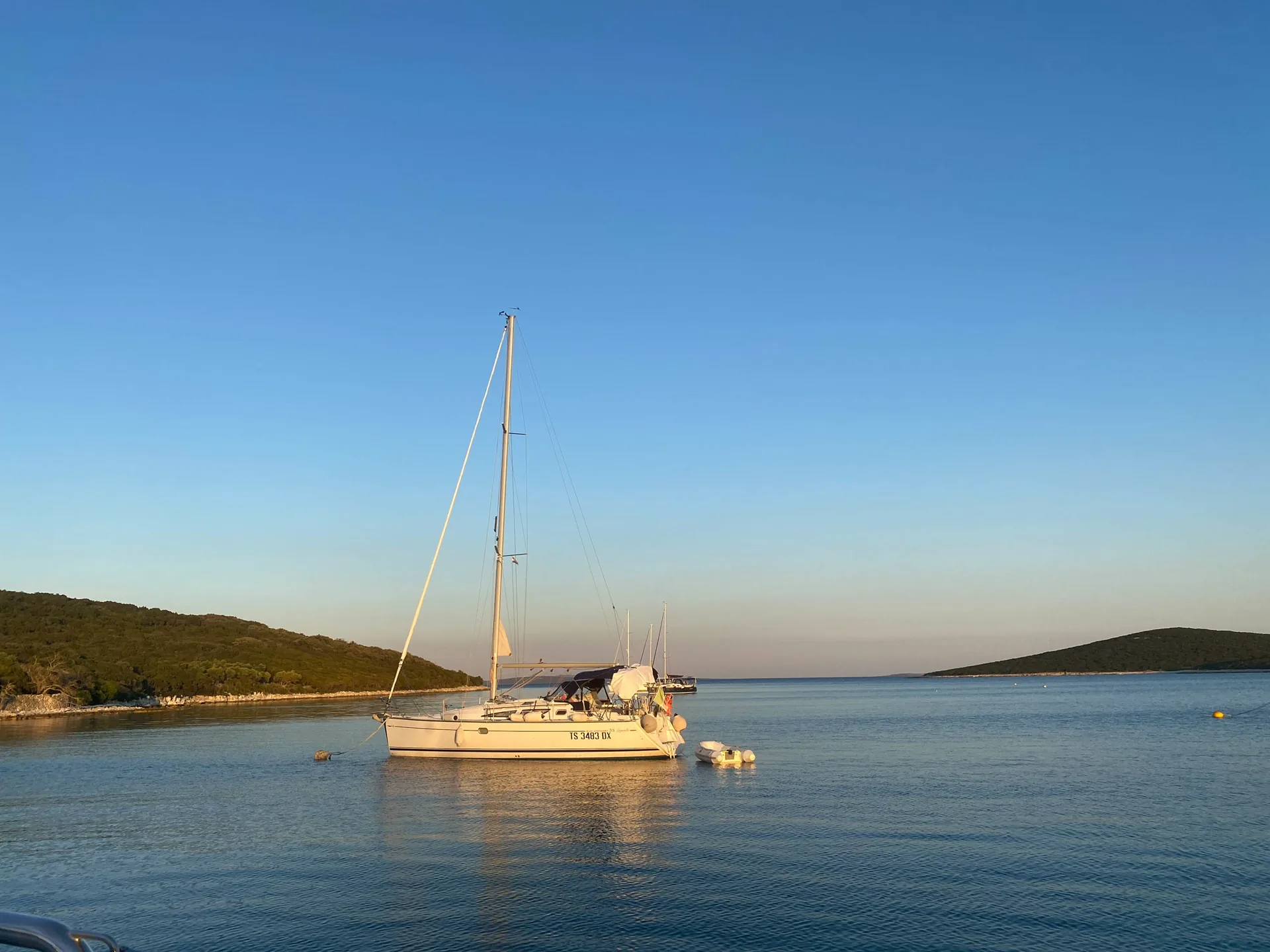 Sailing yacht at a buoy in a sheltered bay off Unije