
On 29 June the weather is calm and intensely hot. In the sun it feels like ‘50 degrees’. The plan is to follow the Italian coast, stop in Caorle and later continue towards Venice.
The heat changes the day even though wind and sea do not create a difficult passage. Preparations take longer, breaks become more important and a place in the shade can be more attractive than a long walk ashore.
Heat is part of passage planning
Sun from above and reflected light from the water meet on deck. A bimini improves comfort, while drinking regularly and sharing tasks remain important. The trip is not cancelled; it simply needs a different rhythm.
Caorle is the next reachable point
The crew does not need to solve the whole cruise this morning. The first step is Caorle along the Italian coast. This intermediate stop gives the day a clear structure before the later approach to Venice.
Heat makes simple work demanding
Strain at sea does not come only from wind and waves. Hours of sun and warm air can reduce attention even on calm water. Drinking, short rest periods and changes at the helm therefore matter before anyone becomes exhausted. Fender and line preparation also begins while concentration is still available. “Feeling like 50 degrees” captures the gap between calm weather and a physically demanding day.
Frequently asked questions
Was a temperature of 50 degrees actually measured?
No. ‘Feeling like 50 degrees’ describes the crew’s impression, not a measured value.
What does intense heat change aboard?
It affects working rhythm, hydration, concentration and the decision about how much time the crew wants to spend ashore.
Why was Caorle a useful intermediate stop?
Caorle divided the route along the Italian coast into a manageable stage before Venice.
Talk to ONBOAT.
If a story raises your own question: we support yacht projects, deliveries, service and owner representation.
View service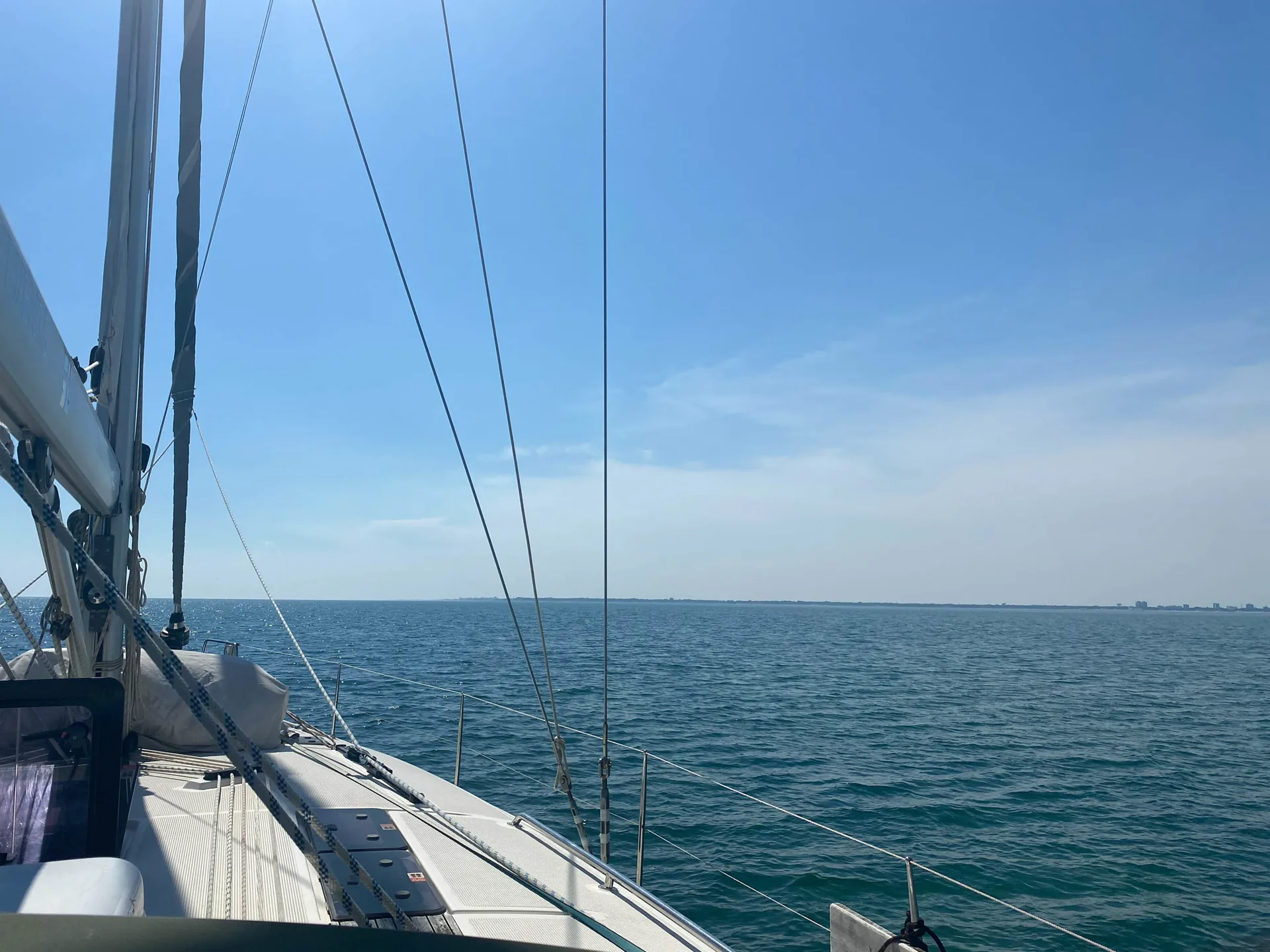 Foredeck of SY HERA during a calm passage under a blue sky