
From Stefan’s experience, HERA’s Volvo Penta D2-75 feels right at approximately 1,800 to 2,200 rpm. At 2,200 rpm he already describes the impression that the engine must work harder.
That observation is not a diagnosis. If behaviour changes, it is a reason to inspect load, propeller, cooling and manufacturer data professionally.
Speed does not rise without limit
As rpm increases, a displacement yacht’s speed does not rise in the same proportion. Resistance, noise and consumption can increase sharply while the additional benefit remains small.
More rpm meets rapidly growing resistance
A displacement yacht faces sharply increasing water resistance near its hull-related speed range. Extra power may then create more wake, noise and consumption for a small speed gain, especially into wind or short seas. HERA therefore compares rpm with speed through and over the water, temperature, sound and exhaust. A sudden change in that relationship deserves investigation.
The hull limits the gain in speed
A heavy displacement yacht pushes a larger wave as speed rises. Near the range typical for its hull, resistance grows sharply, so extra engine power does not create speed in the same proportion. HERA’s rpm and speed are therefore read together. Headwind, short seas or fouling can alter that relationship and deserve attention when it changes suddenly. More rpm is not the goal; a calm balance of progress, consumption, sound and load is.
Speed through water and speed over ground are also read separately. Current can change speed over ground without changing engine or hull load. A persistent change between rpm and speed through water points more directly to altered conditions around the yacht. Comparison across several days is therefore more useful than one isolated moment.
Frequently asked questions
Does more rpm always produce more speed?
No. Resistance rises strongly on a displacement yacht, so the extra benefit may be limited.
Does this rpm range apply to every D2-75?
No. It describes Stefan’s experience with HERA.
When should an engine be checked?
When sound, smoke, temperature, performance or other familiar operating characteristics change noticeably.
Talk to ONBOAT.
If a story raises your own question: we support yacht projects, deliveries, service and owner representation.
View service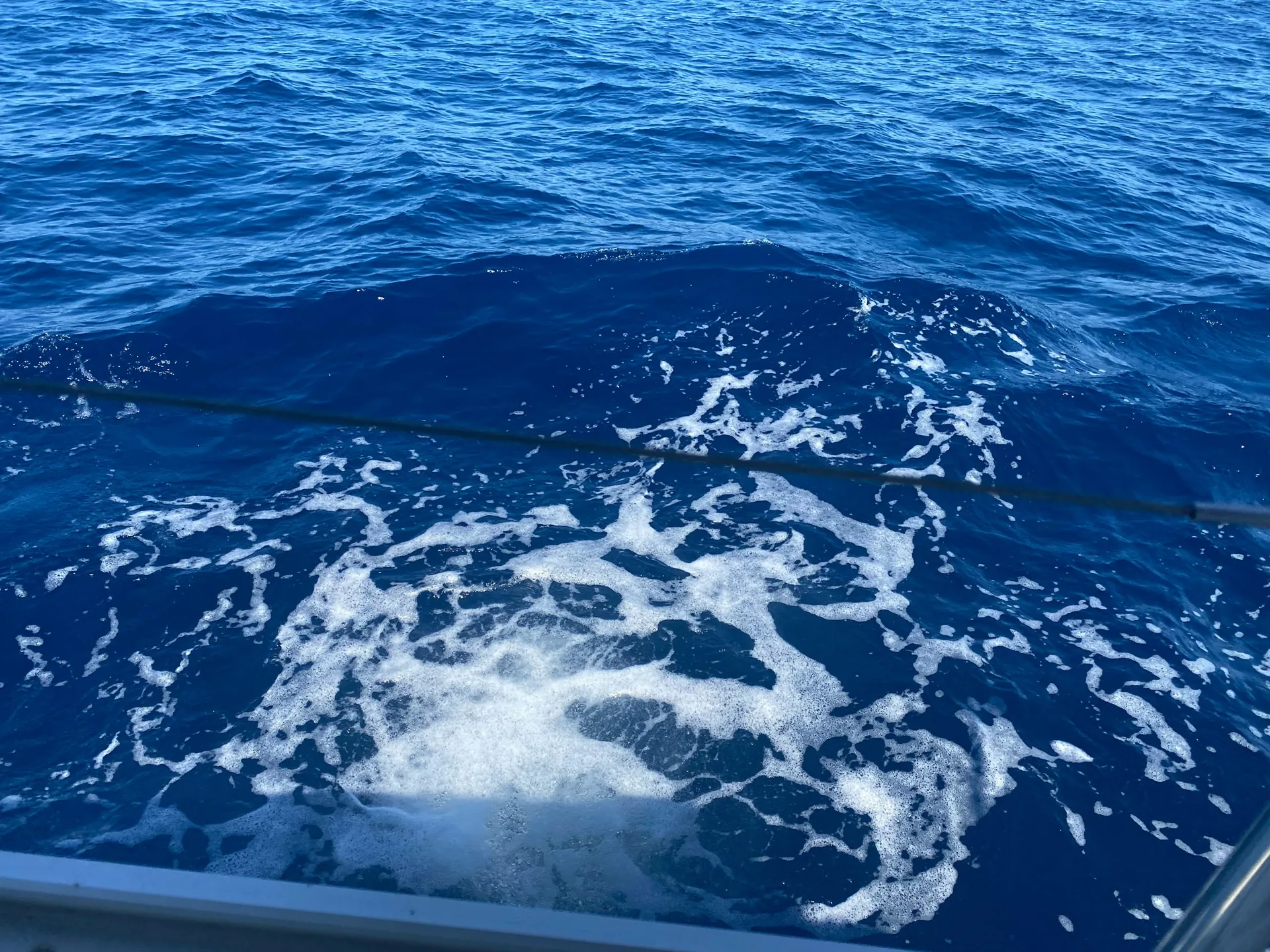 Disturbed wake beside SY HERA while underway