
The radar failure on 3 July reveals a basic principle: no single technical display should carry the whole understanding of position and surroundings.
Knowledge is part of redundancy
A backup helps only when it is reachable, working and understood. Guests do not need to master every system, but those responsible must be able to switch without improvisation.
The backup is tested before a failure
A separate device needs a charged battery, current charts and familiar controls. Paper charts must cover the area, while compass and hand bearing need practice. A short changeover test at the berth shows whether the planned backup paths are genuinely independent and accessible.
Redundancy starts with independent failure paths
Two displays are a genuine fallback only if the same power supply, antenna or data source cannot silence both. Aboard, redundancy is therefore considered by function: how will position, heading, surroundings and depth remain available after a failure? Separate devices, a paper chart, hand-bearing compass, charged power and the ability to use them all contribute. HERA’s radar failure shows that equipment becomes useful redundancy only through preparation and an alert crew.
Frequently asked questions
What does technical redundancy mean?
Important functions can be supported or replaced through paths that are as independent as practical.
Are two screens automatically redundant?
No. If they share power or data, they may fail together.
Must guests operate every system?
No. They are involved appropriately, while those responsible must be able to navigate safely.
Talk to ONBOAT.
If a story raises your own question: we support yacht projects, deliveries, service and owner representation.
View service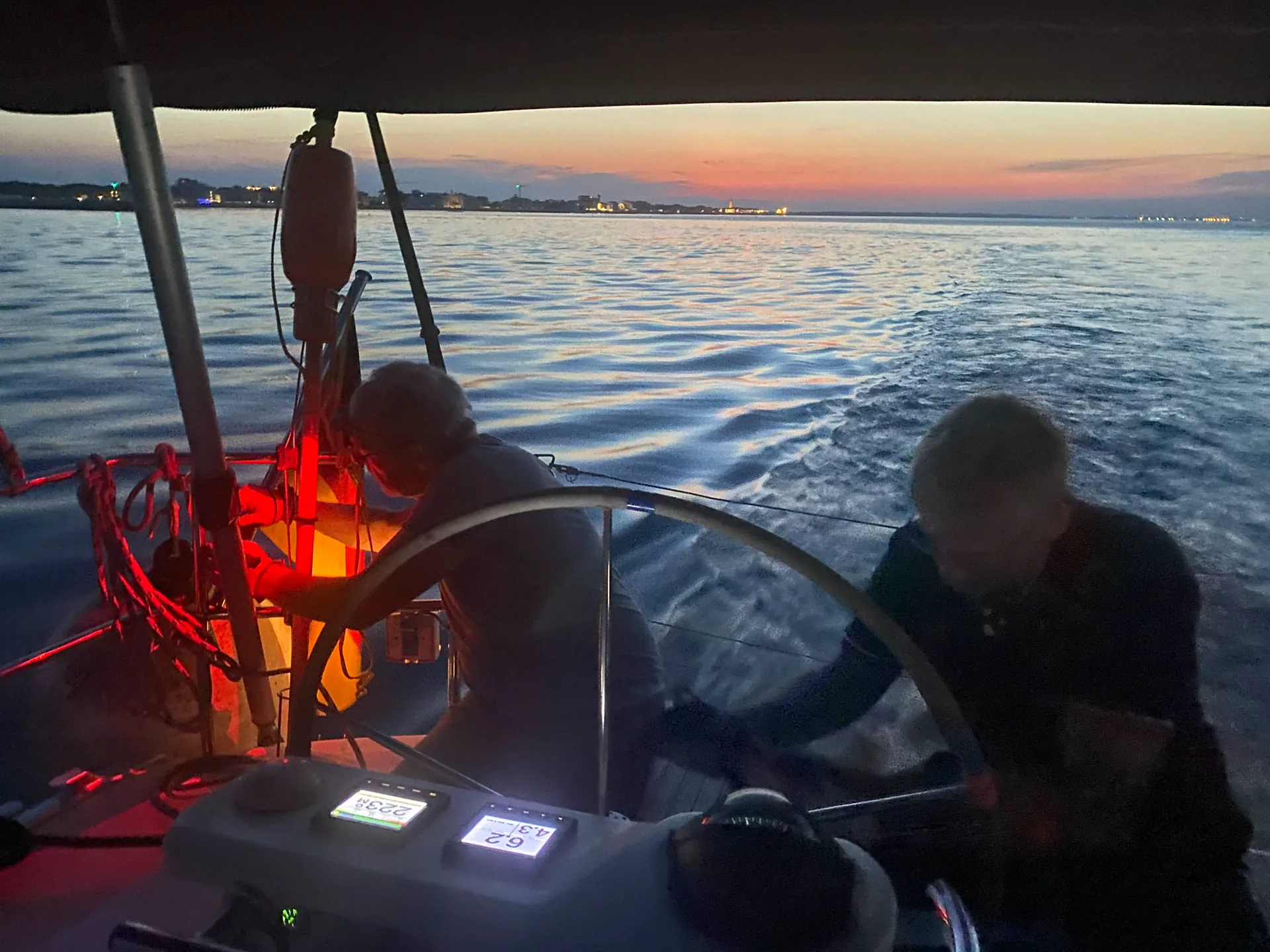 Illuminated helm station of SY HERA during a night passage